
Choosing a Grout Color
Grout is the first thing to get picked and the last thing to get thought about. It is also the part of the floor that ages the fastest and the part that decides how much cleaning your bathroom needs. Here is how to choose it on purpose.
The Short Answer
Grout Is Not a Color Decision. It Is a Maintenance Decision
The grout joint is the only part of a tile floor that is porous by design. The tile is not. The grout is where the water goes, where the soap goes and where the dirt collects. So when you pick a grout color, you are really picking how the room looks after a few years of use.
A light grout in a shower shows every stain. A dark grout hides some things and shows others, mostly the dust. A grout that matches the tile hides the joints and the job looks clean. Which one is right depends on the room and on how much upkeep you want to sign up for.
How Grout Ages
What Happens to Grout Over Time
Cement grout starts out one color and gets darker. The first wet down starts it. It keeps going. It also picks up color from whatever gets on it, and the darker it gets the more the variation shows, because some parts of a floor get wet and some do not.
A sealer slows that down. It does not stop it. Sealing is a maintenance job that has to be redone, and if it is skipped for long enough the surface of the grout starts to wear away at the edges of the joint.
When Epoxy Grout Earns Its Place
Epoxy grout does not absorb, so it does not darken and it does not need sealing. It has one problem of its own. Epoxy can yellow over the years, and once it does you are not scrubbing it out, you are living with it or living with it. Ask for a color that still looks right if it fades.
One more thing that catches people out. The grout sample in the showroom is wet and fresh. Cement grout dries lighter than it looks in the tub. Judge the dry color, not the wet color.
What Goes With What
Three Ways a Grout Color Works
- Matching. The grout is close to the tile, so the floor reads as one continuous surface. It also hides the small size differences between tiles, which is a real thing, because tile from the same box is not the same size.
- Contrasting. The grout outlines every tile like a drawing. It shows a pattern off, and it shows a layout off too. If the floor is going to be laid by hand rather than by machine, a heavy contrast makes every wobble visible.
- A middle tone. A grout that sits between the tile and the wall color. It reads as a floor, it does not fight the tile, and it is a common choice for a bathroom where the walls are busy.
The tile size pushes the same way. Small tile with a wide joint reads as a mosaic of small pieces. Large tile with a wide joint reads as a grid of big pieces with gaps in it. Whatever you pick, the joint width has to suit the tile, and the joint width is a code matter, not a taste matter.
The Joint Width
The Joint Width Is Part of the Grout Decision
ANSI A108.02 says a grout joint should not be less than a sixteenth of an inch under any circumstances. It also says the actual joint has to be at least three times the variation in the facial dimensions of the tile that was supplied.
The Minimum Joint Width for Rectified Tile
That second rule is the one people do not know. TCNA notes that a manufacturer may ship tile with about three thirty-seconds of an inch of difference between the largest and smallest tile in the same box. A joint that is too narrow cannot take that up, so the tiles end up out of square with each other.
TCNA recommends a minimum of an eighth of an inch for rectified tile, where the edges have been ground to a precise size, and about three sixteenths of an inch for calibrated tile, where they have not.
So a narrow joint on a tile that varies in size does not look sleek. It looks like a mistake.
The Honest Reason
Why Most Grout Goes Wrong
Most grout goes wrong because it gets picked in the last week, at the counter, by somebody in a hurry with three jobs behind them. That is how the sample ends up on the board without anybody comparing it to the tile under the room light. That is how a light grout ends up in a shower that will show every mark it takes.
The Wrong Grout Gets Bought for the Wrong Room
It is also how the wrong grout gets bought for the wrong room. A shower floor and a backsplash are two different jobs. They get wet in two different ways, they get cleaned with two different things, and they want different grout.
And it is how nobody tells the homeowner what they are signing up for. Cement grout in a shower means sealing it, and then remembering to seal it again. That is a standing job that shows up on your own calendar every year or so. Nobody mentions it at the counter, because nobody asked.
Cement or Epoxy
The Two Main Kinds, in Plain Terms
Cement grout. A cement base, with sand mixed in for the wider joints. It is the standard, it is easy to work, and it is what most jobs use. It is porous, so it takes on water and it needs sealing. TCNA notes that joints smaller than an eighth of an inch should be grouted with unsanded grout, joints of an eighth of an inch and up with sanded grout, and joints wider than three eighths with a heavier sand.
Epoxy grout. A resin instead of cement. It does not absorb, it does not need sealing, it resists stains and it stands up to a wet room better. It is harder to place, more of it gets wasted, it costs more to buy and it can yellow over the years.
There is a middle option as well, a urethane grout that comes premixed and behaves more like epoxy without the installation fuss. Ask for it by name if you want less maintenance and do not want the epoxy downsides.
The Room Decides the Kind of Grout
The right answer is not the same in every room. A shower floor is a wet room that gets soap on it. A backsplash gets splashed and wiped. A hallway floor gets walked on. Tell the supplier which room it is going in and they will stop offering you the one that is wrong for it.
At the Showroom
What to Bring With You
- The tile itself, or a piece of it. Do not pick grout from a wall of samples. Put the grout next to the tile.
- A photo of the room in daylight and a photo of it at night. Grout looks different under different light, and the color that looked right in the showroom can go cold at home.
- The wall color and the counter color, if there are any. The grout is one of three colors in the room and it has to sit with the other two.
- The size of the tile and whether it is rectified. That decides the joint width, and the joint width decides how the color reads.
- A piece of the existing grout if you are matching into an older room, and a note on which room it is going in so you get the right kind.
What to Do Next
Bring the Tile and the Grout Decision to the Same Table
When we look at a project, we look at the tile size, the layout and the joint width together, because those three decide what the grout has to do. We also talk through which grout goes in which room, and what sealing it involves, before a single bag gets opened.
Send us a photo of the tile you have in mind and a picture of the room. We will tell you what the joint width has to be and what that does to the grout color, and we will say it straight if the tile you picked does not work with the floor you have.
Frequently Asked Questions
Choosing a Grout Color - Questions
Both are right answers for different rooms. A grout that matches lets the tile read as one surface and it hides the natural size variation between tiles. A contrasting grout outlines every tile, which shows off a pattern and also shows off a layout that is out of line. Pick based on what you want the floor to say.
Cement grout does. It is porous by design, it takes on water, and it darkens and stains without a sealer. Epoxy grout does not absorb, so it does not need sealing. Which one you want depends on how much maintenance you are willing to take on in that room.
Cement grout is a cement base, usually with sand added for the wider joints. It is porous, it needs sealing, it is easy to work and it is the standard choice. Epoxy grout is a resin. It does not absorb, it does not need sealing, it resists stains, and it is harder to place and costs more to buy.
ANSI A108.02 says a grout joint should not be less than a sixteenth of an inch under any circumstances. It also says the actual joint should be at least three times the variation in the facial dimensions of the tile supplied, because a narrow joint has less room to take up that variation.
It can be done, but it is easier if you bring a piece of the old joint with you. Grout weathers and most older cement grout has darkened or picked up color, so matching a dry chip on a shelf to a joint that has been washed a hundred times takes some care.
Still have questions? Call us at (860) 990-2332
Where this work gets done
Grout cleaning and sealing, Kitchen backsplash installation by Dmtilellc across Connecticut. Ask for a free estimate.
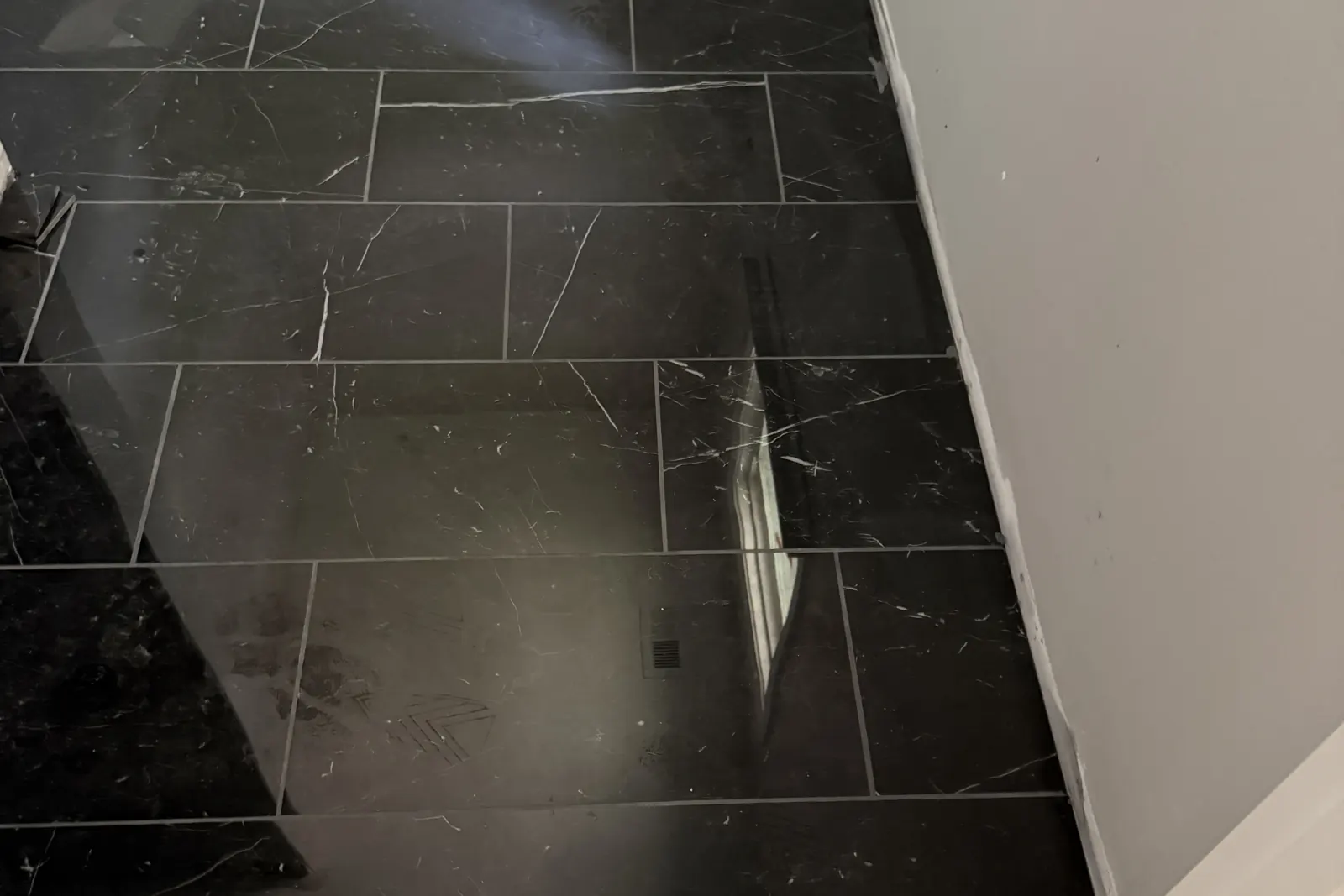
Let Us Work Out the Joint Width and the Grout Together.
If you are in New Britain, Berlin, Newington, Plainville, Farmington, Avon or a nearby Connecticut town and need tile installation, bathroom remodeling, shower waterproofing, backsplash work, or floor tile installation, contact Dmtilellc today. Free estimates available.